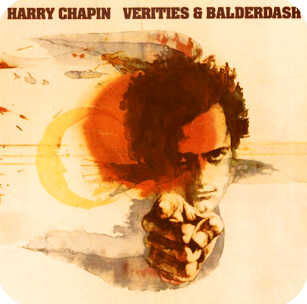
“We were the kids that made America famous, the kind of kids that long since drove our parents to despair.
We were lazy long hairs dropping out,lost confused, and copping out, convinced our futures were in doubt and trying not to care…
We all lived the life that made America famous. Our cops would make a point to shadow us around our town…”
— from Harry Chapin’s “What Made America Famous”
If you taught high school English in public schools for at least as long as I did and (for the most part) enjoyed it, you’ve likely found your mind traveling back from time to time to a parade of remembered faces you once ended up reacting with every weekday (for nine months at a pop). And then… well, just imagine the range of expressions that must have drifted across your face at one time or another. I mean, English being a required subject and all meant that every single kid in the school had to populate those English department classrooms, from the infamous Welcome Back Kotter “sweat hogs” to la crème de la crème. So yeah, that’s a lot of faces.
But if by chance you didn’t (for the most part) enjoy it, if you perhaps felt compelled to erect some ironclad emotional barrier between yourself and, say, those really challenging Kotter kids you felt you had nothing in common with, the ones for whom a college-they-could-never-afford-anyway loomed as the last possible thing on earth they could expect in their seemingly, already-cement-hardened futures, then I believe you may really have missed out on something. Something big perhaps.
Sure, it’s a common thing: teachers vying and hoping for the “best classes.” And I admit it, that’s the way I started out. I mean, being handed the list of the English classes you’re being assigned to teach each year is like Draft Day in the NFL. Of course you want the winners. Because they’ll be the ones most like you, won’t they. The ones you’ll feel the most comfortable with, the ones you’ll better understand and can more easily identify with and who, in turn, will most likely understand and more easily identify with you. The ones more likely to put up with your English Grammar and Composition, your Shakespeare, and your Poetry.
But… what the hell are you ever supposed to do with all those hands-on kids? Those shop-boys-with-the-grease-under-their-fingernail ‘English classes (well, besides wheedling them into grease-and-oil-changing your car over in the shop for cheap)? And those desperate and unhappy girls for whom the only seeming path out of the continuing hell of their blue-collar parents’ captivity is to get themselves pregnant and married as fast as they can? Or with all those future blue-collar hamburger-flippers and lifetime-convenience-store-clerk boys and girls, those future fathers and child-bearing mothers who will continue re-populating the town by making even more hamburger-flippers and lifetime-convenience-store-clerk boys and girls?
I’m talkin’ all the probable poetry-and-classic-literature-haters here. What do you have that they’ll ever need or find useful? But especially, whatever the hell do you have to offer to that one particular, rogue, all-boy class of junior members of the local biker gang, the Exiles, that I had to deal with?
You see what I mean? You feeling me?
Well, turns out the answer to that is… only yourself. You as the real person you are. That’s what you have to offer. Because that’s all you really have to work with, isn’t it. I mean it. And that begins by first having to sort of surrender to them right at the beginning. Surrendering and just embracing the fact that… well, of course they’re poetry-and-classic-literature-haters. Why wouldn’t they be? You’d be too, if you were in their shoes. And you and them? You’re stuck with each other.
Remember this? “In order to begin working out a solution to any problem, first you have to clearly identify and state exactly what the problem is.”
My advice to would-be public high school English teachers? Rather than beginning by going all-out NAZI on these more-experienced-than-you little ‘soldiers’ in the cold war against teachers (and oh I pity you if that’s gonna be your style) (which wouldn’t work anyway unless, that is, they were in the Army Basic Training and you just happened to be their Drill Instructor), you’re gonna be much better off beginning by actually listening to their bitching about the school. And about English classes in general.
And let that be your starting point, your springboard. Surprise’em by letting’em know you enjoy hearing about how much they despise school and your subject. That’ll throw’em off-guard. And besides, their honest, unvarnished opinions on the subject really can be… entertaining sometimes. Especially if you encourage them to be really honest at it. And you know what?
You’ll likely end up discovering that you honestly do harbor some common ground with them, despite what you’d perhaps prefer to think. Because all human beings do have common denominators. So yeah, in the long run I found it best to get to get right to work, digging down, and finding out just what those are. Tell them stories (talkin’ honest stories here) about your life and the bitching you did in school about your teachers and your crappy classes. Get’em to tell you some of their stories, assuring them that what they have to tell you… well, you know … “whatever happens in Vegas, stays in Vegas” (with the very big exception always being, of course, that by law, if it turns out that anything that’s divulged happens to include information indicative of some possible harm to themselves or others, etc. that has to be reported— yeah, you have to make that perfectly clearly to them right up front). But…really listen. Their stories are bound to be crazy-interesting. Probably a lot more interesting than yours. At least, that was my experience.
And you know what then? You’ll be on your way to respecting their points of view. And once you begin showing them your respect, you’ll already have begun garnering some of theirs. And then voila: I promise you that walking in through that damn classroom door each and every morning won’t feel nearly as much like such a real chore any more. Because you just might’ve started to (drum roll, please!) like them. It’s amazing.
And something else: I accidentally discovered that my particular kids (talkin’ my junior Exiles who, by the way, are featured exclusively back in one of my earlier posts titled “Bummer”– you should go back and read it) had a lot to teach me with their eventual honesty. Plus, I found those kids all pretty damned humorous and entertaining as well, if you want to know the truth.
Now yeah, yeah, yeah— sure, I know I’m coming across like some Yoda here, some wise old owl blowing his own horn and purporting to have all the answers. Truth is… it took me some years and many failures to wind up with the amount of the answers I finally did learn. I was pretty mistake-prone in all of the above in my first years. But way back, some very wise and passionate home economics teacher/colleague taught me this wise, old adage that really helped to set me on the path to sanity as a public school teacher: “No one cares how much you know until they know how much you care.” Yeah. Sounds corny. But think about it.
~ ~ ~ ~ ~ ~ ~ ~ ~ ~ ~ ~

BRAT PACKS
Cafeteria Duty with its Breakfast Club diversity
was always so much more vibrant than the
funereal dining doldrums of the faculty lounge,
what with the geek squad, the cheering squad,
the Romeos and Juliets, the Bettys and Veronicas,
the Dungeons and Dragons die-hards, a Ferris Bueller
or two thrown in, and possibly even a
future Stephen King seated at those tables
All those God’s-little-gifts-to-teachers whose
youthful honesty and sit-down-stand-up comedy
kept me in stitches and my aging soul decades
younger over the long career years
me, with half my life already slipped behind,
but them still with the Big Promise of Everything,
the whole damn shootin’ match, still looming
like some mirage in the desert up ahead–
yes, all of us unique salt-of-the-earth
stereotypes… breaking bread together
around the salt and pepper shakers,
spicing up each other’s lives…

from TO DIVERSITY AND DEMOCRACY: A TOAST!
Here’s to those too few and far-between bastions of diversity we’ve occasionally stumbled
upon over time… those vibrant, spice-of-life oases of heterogeneity in our deserts of
conformity: our talk-like-us flocks, our act-like-us herds, our pre-fab, chameleon-career lives—
And here’s to the public schools
of years gone by where slide-ruled, pocket-protectored
eggheads communed in cafeterias across the tables from Streetcar-Named-Desire Stellas
in the Archie-and-Jughead-hijinks melting pot, all waiting together in the lunch line of life
for the big segregation crapshoot of becoming somebody… some day…
~ ~ ~ ~ ~ ~ ~ ~ ~ ~ ~ ~
But for now, back again to these particular song lyrics (which you’ll be invited to listen to shortly) from my featured singer/songwriter’s song, “What Made America Famous”:
“We were the kids that made America famous, the kind of kids that long since drove our parents to despair.
We were lazy long hairs dropping out,lost confused, and copping out,
convinced our futures were in doubt and trying not to care…
We all lived the life that made America famous. Our cops would make a point to shadow us around our town…”
Listening to these lines has always sent a crooked, sardonic smile crawling across my face. Because they’ve always reminded me of some of the more challenging little Kotters I had at Mexico (ME) High School throughout the 70’s. Me, watching from a distance the little on-going cold war between the boys in blue and a number of my rebel-without-a-cause ‘students.’ Yeah. No love lost there.
See, weekends and after school my boys insisted on hanging out on downtown street corners, the most popular being the one right out in front of a pastry shop. Which of course was where the cops habitually roosted. And which consequently was where said cops were kept their busiest, busting up and dispersing just such “unlicensed assemblies,” mostly on the grounds that, well, it just didn’t look good for the town. And OK, truth be told those boys did make some shoppers nervous, of course.
Actually I have to admit they made my wife a little nervous. You know, we’d be strolling down the sidewalk on a sunny afternoon and up ahead we’d spy between eight and a dozen toughs leaning up against a store front like something straight out of Marlon Brando’s The Wild One (well, with the exception of that one biker-dude who usually had his cute, 12-inch-tall, curly-tailed pug-on-a-leash (rather than the pit bull guard dog you might expect to see accompanying a badass like him ).
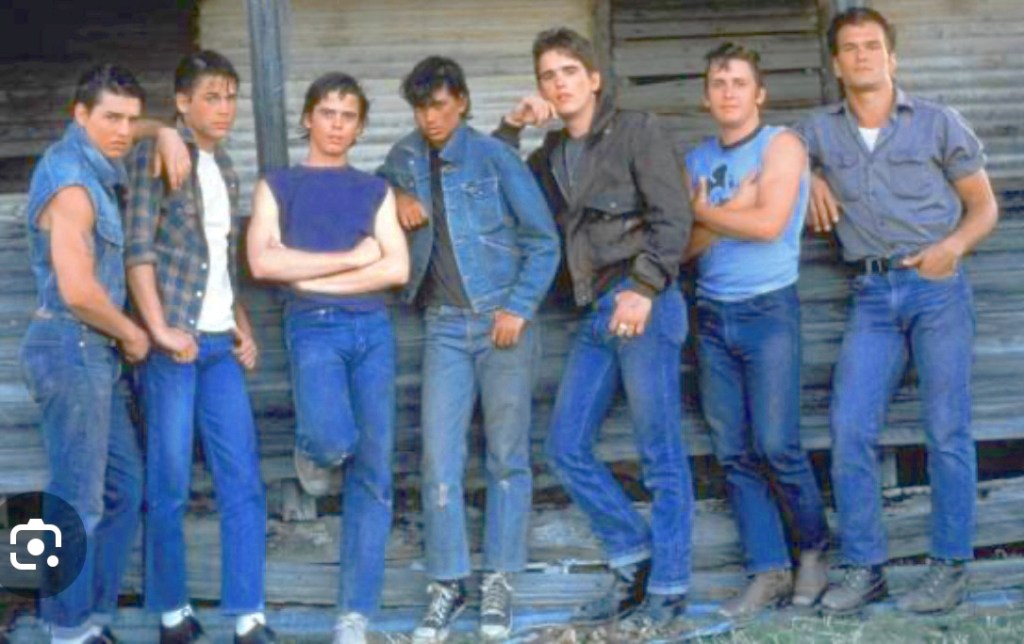
“UH-oh,” she’d whisper in my ear, “think maybe we oughtta turn back around? Or cross the road?”
“Nah,” I’d tell her, “you’re with me, so you’re safe. Me? I’m protected by The Mark of the Phantom. They won’t bother us.”
Right after which a couple of the bigger ones (looking pretty ominous, sporting their shades and tattoos) might just playfully block our way for a moment and challenge, “Now just where do you two think you’re going…?”
To which my quick and witty comeback would always be something like, “Oh, I dunno. Straight through you if you decide not to move and instead wanna end up pickin’ broken glass outta eyes for the next two hours.”
And then of course there’d be the light-hearted little shadow-boxing horseplay between me and them (you know, that dumbass male bonding thing) but we’d always end up sailing right through them unscathed. And why? Because they’d learned to like me by then. And why was that? Because they’d realized that for some unfathomable… whatever-reason, they could tell I’d honestly taken a shine to them. Which in their world… for a teacher… was unheard of.
But anyway, after the near-daily shepherding-of-the-kids-off-the-sidewalks routine, the cops would mosey themselves on into the pastry shop, ostensibly turning a deaf ear to the retreating catcalls behind them referencing the ‘fat-ass’ physiques of a couple of those doughnut-devouring stereotypes.
However, that’s just what the kids would do overtly.
Covertly, the retaliation strategies they’d come up with could’ve earned them a place among the French Resistance Forces during World War II. The worst one being (in my opinion) to move their gathering on down the street to where the patrol cars were parked in order to (wait for it) set that poor, shivering, little pug right onto the hood of one of them— specifically the one with the drug-sniffing German shepherd left waiting inside.

Because oh, that canine locked in there didn’t like that little pipsqueak “hood ornament” rattling its toenails on the patrol car paint job one bit! And according to them (I never witnessed it myself, of course) that dog would be going bat-shit wild in there, leaping amok around the interior, and trying to bust out of the car to get at the lot of them, his berserk talons all the while just a-tearing the old stuffing right out of the upholstery!
Oh I’m sure they were exaggerating in their glory… but they sure loved telling me all about it.
However the most devious (or should I say most deviant) strategy they’d come up with was the ‘secret seeding’ of the police station flower garden with marijuana seedlings at night. The custodian there, who also served as the part-time gardener, ended up unwittingly watering and caring for them for quite some time. Right up until the moment one of Mexico’s finest eventually spotted the embarrassing extracurricular green and glorious growth among the camouflage.

Now that one made the Police Log in the local paper. And I’ve gotta say, they were oh so proud of themselves!
Vive la resistance!
~ ~ ~ ~ ~ ~ ~ ~ ~ ~ ~ ~
Now of course this Harry Chapin song that I’m honestly dying to share with you in a moment, “What Made America Famous,” isn’t about my little biker friends, per se. Rather it’s about America’s signature civil conflict between the “hard hats” and the “long hairs” that indelibly marked the 1960’s and ‘70’s. Think of the musical Hair. Think Easy Rider. But no, more than that, this ballad is all about about human decency. Pure and simple.
But first, allow me to share this particular little memory I’ve been holding onto over the decades:
So… I’m sitting in a warm, old-fashion barber shop on a frigid night in January, 1965. Whenever another customer sidles in through the door, an icy gust sparkled with blowing snowflakes shoulders its way in right behind him. There are five or six of us waiting to have our ‘ears lowered.’ I’m the youngest here, a college kid matriculated at the local state teachers college, the only one there not balding or with a head of white hair. It’s busy, but there are two barbers buzzing and clipping away, so my wait won’t be long.
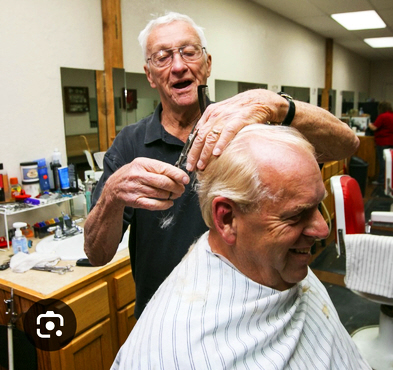
So I’m just sitting back and contenting myself with listening to the old gents jawing away. Cackling about that ‘new streaker craze.’ Ruminating over the shipping off of American troops to Viet Nam. Weighing in on Muhammed Ali’s defeat over Sonny Liston, and who the hell does he think he is anyway, calling himself Muhammed like that, for Christ’s sake? This is much livelier than sitting me just sitting alone in my dorm room, poring over my World History text.
Suddenly whoosh! The door blows open. And standing half-in and half-out is a smiling young man with almost shoulder-length, snowflake-flecked hair. And he’s wearing a faded old Army field jacket.
“What’re the chances of getting a haircut tonight?”
I catch both barbers glaring at him. “Zero!” the older says. “Now get the hell outta here and close that fucking door!”
I’m shocked. But the young man acknowledges that he’s letting the weather in so, still all smiles, he steps inside and closes the door behind him. “No, seriously.”
“What? I don’t look serious? You didn’t hear me say ‘No?‘”
“But c’mon, why not?”
“Jesus, look around. Can’t you see the crowd we got in here tonight?”
“Well, if that’s it, I don’t mind waiting…”
“Beat it, kid!”
“Hey, come on. I gotta get a haircut. How much will it cost? I’ll be glad to even pay extra. Just tell me how much.”
The old guy studies him. “Fifty bucks.”
“What? Fifty…”
“And that’s only if. If… you take a bath, and shampoo the lice outta your hair first.”
“Lice?” No longer smiling now.
“See, we don’t do hippies in here, pal. Now beat it!”
The kid looked around the shop. At the grinning old men. At uncomfortable me. And then back at the barber. The kid’s got a pretty good glare going himself now. “Jesus Christ. I just wanted to get a fucking… Hippie!? Alright then! Fuck YOU!”
He turns on his heel, yanks the door open, and storms back out into the snow, purposely leaving the door open. Open wide.
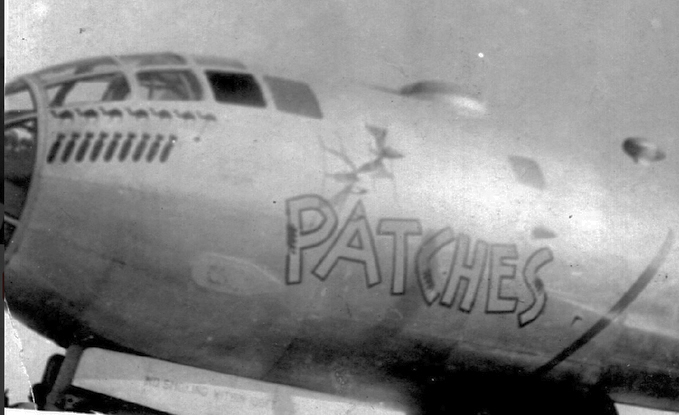
I’m feeling bad for the kid. But I realize too that where the old fellas are coming from is their definition of patriotism. It leaves me feeling uneasy. Kinda confused. I mean, my dad flew missions in a B-29 during World War II and, man, I’m super-proud of him. And you know… I’m only a sophomore, but I’ve been entertaining some thoughts about perhaps enlisting myself, in the Air Force after college.
But this whole thing just leaves me feeling… not knowing what to think.
~ ~ ~ ~ ~ ~ ~ ~ ~ ~ ~ ~
So anyway, the song and lyrics I’ve got waiting for you below I feel skillfully and emotionally capture the conflict I came to know back then as the long hairs vs. the hard hats. And there’s a recurring single line in the lyrics that pretty much kinda sums up my little barbershop example in a nutshell:
“There’s something burning somewhere.”
Please. Take a listen and follow along. I believe you will find it a powerful experience. I know I always do…






 NEARING THE END OF THE LINE