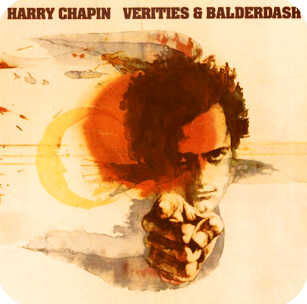
THE AMERICA THAT MADE AMERICA FAMOUS

We were the kids that made America famous, the kind of kids that long since drove our parents to despair.

We were lazy long hairs dropping out,lost confused, and copping out, convinced our futures were in doubt and trying not to care…

We all lived the life that made America famous. Our cops would make a point to shadow us around our town…”     

— from Harry Chapin’s “What Made America Famous”

If you taught high school English in public schools for at least as long as I did and (for the most part) enjoyed it, you’ve likely found your mind traveling back from time to time to a parade of remembered faces you once ended up reacting with every weekday (for nine months at a pop). And then… well, just imagine the range of expressions that must have drifted across your face at one time or another. I mean, English being a required subject and all meant that every single kid in the school had to populate those English department classrooms, from the infamous Welcome Back Kotter “sweat hogs” to la crème de la crème. So yeah, that’s a lot of faces.

But if by chance you didn’t (for the most part) enjoy it, if you perhaps felt compelled to erect some ironclad emotional barrier between yourself and, say, those really challenging Kotter kids you felt you had nothing in common with, the ones for whom a college-they-could-never-afford-anyway loomed as the last possible thing on earth they could expect in their seemingly, already-cement-hardened futures, then I believe you may really have missed out on something. Something big perhaps.

Sure, it’s a common thing: teachers vying and hoping for the “best classes.” And I admit it, that’s the way I started out. I mean, being handed the list of the English classes you’re being assigned to teach each year is like Draft Day in the NFL. Of course you want the winners. Because they’ll be the ones most like you, won’t they. The ones you’ll feel the most comfortable with, the ones you’ll better understand and can more easily identify with and who, in turn, will most likely understand and more easily identify with you. The ones more likely to put up with your English Grammar and Composition, your Shakespeare, and your Poetry.

But… what the hell are you ever supposed to do with all those hands-on kids? Those shop-boys-with-the-grease-under-their-fingernail ‘English classes (well, besides wheedling them into grease-and-oil-changing your car over in the shop for cheap)? And those desperate and unhappy girls for whom the only seeming path out of the continuing hell of their blue-collar parents’ captivity is to get themselves pregnant and married as fast as they can? Or with all those future blue-collar hamburger-flippers and lifetime-convenience-store-clerk boys and girls, those future fathers and child-bearing mothers who will continue re-populating the town by making even more hamburger-flippers and lifetime-convenience-store-clerk boys and girls? 

I’m talkin’ all the probable poetry-and-classic-literature-haters here. What do you have that they’ll ever need or find useful? But especially, whatever the hell do you have to offer to that one particular, rogue, all-boy class of junior members of the local biker gang, the Exiles, that I had to deal with?

You see what I mean? You feeling me?

Well, turns out the answer to that is… only yourself. You as the real person you are. That’s what you have to offer. Because that’s all you really have to work with, isn’t it. I mean it. And that begins by first having to sort of surrender to them right at the beginning. Surrendering and just embracing the fact that… well, of course they’re poetry-and-classic-literature-haters. Why wouldn’t they be? You’d be too, if you were in their shoes. And you and them? You’re stuck with each other.

Remember this? “In order to begin working out a solution to any problem, first you have to clearly identify and state exactly what the problem is.”

My advice to would-be public high school English teachers? Rather than beginning by going all-out NAZI on these more-experienced-than-you little ‘soldiers’ in the cold war against teachers (and oh I pity you if that’s gonna be your style) (which wouldn’t work anyway unless, that is, they were in the Army Basic Training and you just happened to be their Drill Instructor), you’re gonna be much better off beginning by actually listening to their bitching about the school. And about English classes in general.

And let that be your starting point, your springboard. Surprise’em by letting’em know you enjoy hearing about how much they despise school and your subject. That’ll throw’em off-guard. And besides, their honest, unvarnished opinions on the subject really can be… entertaining sometimes. Especially if you encourage them to be really honest at it. And you know what?

You’ll likely end up discovering that you honestly do harbor some common ground with them, despite what you’d perhaps prefer to think. Because all human beings do have common denominators. So yeah, in the long run I found it best to get to get right to work, digging down, and finding out just what those are. Tell them stories (talkin’ honest stories here) about your life and the bitching you did in school about your teachers and your crappy classes. Get’em to tell you some of their stories, assuring them that what they have to tell you…  well, you  know … “whatever happens in Vegas, stays in Vegas” (with the very big exception always being, of course, that by law, if it turns out that anything that’s divulged happens to include information indicative of some possible harm to themselves or others, etc. that has to be reported— yeah, you have to make that perfectly clearly to them right up front). But…really listen. Their stories are bound to be crazy-interesting. Probably a lot more interesting than yours. At least, that was my experience.

And you know what then? You’ll be on your way to respecting their points of view. And once you begin showing them your respect, you’ll already have begun garnering some of theirs. And then voila: I promise you that walking in through that damn classroom door each and every morning won’t feel nearly as much like such a real chore any more. Because you just might’ve started to (drum roll, please!) like them. It’s amazing.

And something else: I accidentally discovered that my particular kids (talkin’ my junior Exiles who, by the way, are featured exclusively back in one of my earlier posts titled “Bummer”– you should go back and read it) had a lot to teach me with their eventual honesty. Plus, I found those kids all pretty damned humorous and entertaining as well, if you want to know the truth.

Now yeah, yeah, yeah— sure, I know I’m coming across like some Yoda here, some wise old owl blowing his own horn and purporting to have all the answers. Truth is… it took me some years and many failures to wind up with the amount of the answers I finally did learn. I was pretty mistake-prone in all of the above in my first years. But way back, some very wise and passionate home economics teacher/colleague taught me this wise, old adage that really helped to set me on the path to sanity as a public school teacher: “No one cares how much you know until they know how much you care.” Yeah. Sounds corny. But think about it.

~ ~ ~ ~ ~ ~ ~ ~ ~ ~ ~ ~

BRAT PACKS

Cafeteria Duty with its Breakfast Club diversity

was always so much more vibrant than the

funereal dining doldrums of the faculty lounge,

what with the geek squad, the cheering squad,

the Romeos and Juliets, the Bettys and Veronicas,

the Dungeons and Dragons die-hards, a Ferris Bueller

or two thrown in, and possibly even a

future Stephen King seated at those tables

All those God’s-little-gifts-to-teachers whose

youthful honesty and sit-down-stand-up comedy

kept me in stitches and my aging soul decades

younger over the long career years

me, with half my life already slipped behind,

but them still with the Big Promise of Everything,

the whole damn shootin’ match, still looming

like some mirage in the desert up ahead– 

yes, all of us unique salt-of-the-earth

stereotypes… breaking bread together

around the salt and pepper shakers,

spicing up each other’s lives…

from TO DIVERSITY AND DEMOCRACY: A TOAST!

Here’s to those too few and far-between bastions of diversity we’ve occasionally stumbled

upon over time… those vibrant, spice-of-life oases of heterogeneity in our deserts of

conformity: our talk-like-us flocks, our act-like-us herds, our pre-fab, chameleon-career lives—

And here’s to the public schools
of years gone by where slide-ruled, pocket-protectored

eggheads communed in cafeterias across the tables from Streetcar-Named-Desire Stellas

in the Archie-and-Jughead-hijinks melting pot, all waiting together in the lunch line of life

for the big segregation crapshoot of becoming somebody…  some day…

~ ~ ~ ~ ~ ~ ~ ~ ~ ~ ~ ~

But for now, back again to these particular song lyrics (which you’ll be invited to listen to shortly) from my featured singer/songwriter’s song, “What Made America Famous”:

We were the kids that made America famous, the kind of kids that long since drove our parents to despair.

We were lazy long hairs dropping out,lost confused, and copping out,
convinced our futures were in doubt and trying not to care…

We all lived the life that made America famous. Our cops would make a point to shadow us around our town…”     

Listening to these lines has always sent a crooked, sardonic smile crawling across my face. Because they’ve always reminded me of some of the more challenging little Kotters I had at Mexico (ME) High School throughout the 70’s. Me, watching from a distance the little on-going cold war between the boys in blue and a number of my rebel-without-a-cause ‘students.’ Yeah. No love lost there.

See, weekends and after school my boys insisted on hanging out on downtown street corners, the most popular being the one right out in front of a pastry shop. Which of course was where the cops habitually roosted. And which consequently was where said cops were kept their busiest, busting up and dispersing just such “unlicensed assemblies,” mostly on the grounds that, well, it just didn’t look good for the town. And OK, truth be told those boys did make some shoppers nervous, of course.

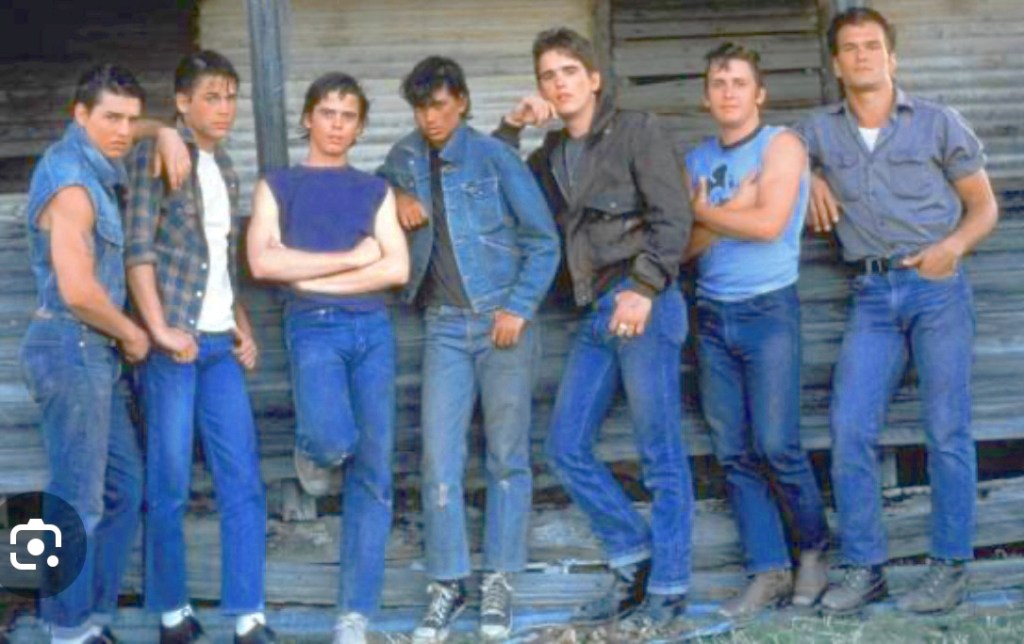
Actually I have to admit they made my wife a little nervous. You know, we’d be strolling down the sidewalk on a sunny afternoon and up ahead we’d spy between eight and a dozen toughs leaning up against a store front like something straight out of Marlon Brando’s The Wild One (well, with the exception of that one biker-dude who usually had his cute, 12-inch-tall, curly-tailed pug-on-a-leash (rather than the pit bull guard dog you might expect to see accompanying a badass like him ).
UH-oh,” she’d whisper in my ear, “think maybe we oughtta turn back around? Or cross the road?”

Nah,” I’d tell her, “you’re with me, so you’re safe. Me? I’m protected by The Mark of the Phantom. They won’t bother us.”

Right after which a couple of the bigger ones (looking pretty ominous, sporting their shades and tattoos) might just playfully block our way for a moment and challenge, “Now just where do you two think you’re going…?

To which my quick and witty comeback would always be something like, “Oh, I dunno. Straight through you if you decide not to move and instead wanna end up pickin’ broken glass outta eyes for the next two hours.”

And then of course there’d be the light-hearted little shadow-boxing horseplay between me and them (you know, that dumbass male bonding thing) but we’d always end up sailing right through them unscathed. And why? Because they’d learned to like me by then. And why was that? Because they’d realized that for some unfathomable… whatever-reason, they could tell I’d honestly taken a shine to them. Which in their world… for a teacher… was unheard of.

But anyway, after the near-daily shepherding-of-the-kids-off-the-sidewalks routine, the cops would mosey themselves on into the pastry shop, ostensibly turning a deaf ear to the retreating catcalls behind them referencing the ‘fat-ass’ physiques of a couple of those doughnut-devouring stereotypes.

However, that’s just what the kids would do overtly.

Covertly, the retaliation strategies they’d come up with could’ve earned them a place among the French Resistance Forces during World War II. The worst one being (in my opinion) to move their gathering on down the street to where the patrol cars were parked in order to (wait for it) set that poor, shivering, little pug right onto the hood of one of them— specifically the one with the drug-sniffing German shepherd left waiting inside.

Because oh, that canine locked in there didn’t like that little pipsqueak “hood ornament” rattling its toenails on the patrol car paint job one bit! And according to them (I never witnessed it myself, of course) that dog would be going bat-shit wild in there, leaping amok around the interior, and trying to bust out of the car to get at the lot of them, his berserk talons all the while just a-tearing the old stuffing right out of the upholstery!

Oh I’m sure they were exaggerating in their glory… but they sure loved telling me all about it.

However the most devious (or should I say most deviant) strategy they’d come up with was the ‘secret seeding’ of the police station flower garden with marijuana seedlings at night. The custodian there, who also served as the part-time gardener, ended up unwittingly watering and caring for them for quite some time. Right up until the moment one of Mexico’s finest eventually spotted the embarrassing extracurricular green and glorious growth among the camouflage.

Now that one made the Police Log in the local paper. And I’ve gotta say, they were oh so proud of themselves!

Vive la resistance!   

~ ~ ~ ~ ~ ~ ~ ~ ~ ~ ~ ~

Now of course this Harry Chapin song that I’m honestly dying to share with you in a moment, “What Made America Famous,” isn’t about my little biker friends, per se.  Rather it’s about America’s signature civil conflict between the “hard hats” and the “long hairs” that indelibly marked the 1960’s and ‘70’s. Think of the musical Hair. Think Easy Rider. But no, more than that, this ballad is all about about human decency. Pure and simple.

But first, allow me to share this particular little memory I’ve been holding onto over the decades:

So… I’m sitting in a warm, old-fashion barber shop on a frigid night in January, 1965. Whenever another customer sidles in through the door, an icy gust sparkled with blowing snowflakes shoulders its way in right behind him. There are five or six of us waiting to have our ‘ears lowered.’ I’m the youngest here, a college kid matriculated at the local state teachers college, the only one there not balding or with a head of white hair. It’s busy, but there are two barbers buzzing and clipping away, so my wait won’t be long.
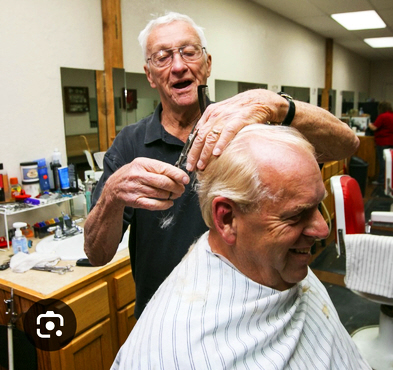
So I’m just sitting back and contenting myself with listening to the old gents jawing away. Cackling about that ‘new streaker craze.’  Ruminating over the shipping off of American troops to Viet Nam. Weighing in on Muhammed Ali’s defeat over Sonny Liston, and who the hell does he think he is anyway, calling himself Muhammed like that, for Christ’s sake? This is much livelier than sitting me just sitting alone in my dorm room, poring over my World History text.

Suddenly whoosh! The door blows open. And standing half-in and half-out is a smiling young man with almost shoulder-length, snowflake-flecked hair. And he’s wearing a faded old Army field jacket.

“What’re the chances of getting a haircut tonight?”

I catch both barbers glaring at him. “Zero!” the older says. “Now get the hell outta here and close that fucking door!”

I’m shocked. But the young man acknowledges that he’s letting the weather in so, still all smiles, he steps inside and closes the door behind him. “No, seriously.”

“What? I don’t look serious? You didn’t hear me say ‘No?‘”

“But c’mon, why not?

“Jesus, look around. Can’t you see the crowd we got in here tonight?”

“Well, if that’s it, I don’t mind waiting…”

“Beat it, kid!”

“Hey, come on. I gotta get a haircut. How much will it cost? I’ll be glad to even pay extra. Just tell me how much.”

The old guy studies him. “Fifty bucks.”

What? Fifty…

“And that’s only if. If… you take a bath, and shampoo the lice outta your hair first.”

Lice?” No longer smiling now.

“See, we don’t do hippies in here, pal. Now beat it!”

The kid looked around the shop. At the grinning old men. At uncomfortable me.  And then back at the barber. The kid’s got a pretty good glare going himself now. “Jesus Christ. I just wanted to get a fucking…  Hippie!? Alright then! Fuck YOU!

He turns on his heel, yanks the door open, and storms back out into the snow, purposely leaving the door open. Open wide.

I’m feeling bad for the kid. But I realize too that where the old fellas are coming from is their definition of patriotism. It leaves me feeling uneasy. Kinda confused. I mean, my dad flew missions in a B-29 during World War II and, man, I’m super-proud of him. And you know… I’m only a sophomore, but I’ve been entertaining some thoughts about perhaps enlisting myself, in the Air Force after college.

But this whole thing just leaves me feeling… not knowing what to think.

~ ~ ~ ~ ~ ~ ~ ~ ~ ~ ~ ~

So anyway, the song and lyrics I’ve got waiting for you below I feel skillfully and emotionally capture the conflict I came to know back then as the long hairs vs. the hard hats. And there’s a recurring single line in the lyrics that pretty much kinda sums up my little barbershop example in a nutshell:

There’s something burning somewhere.”

Please. Take a listen and follow along. I believe you will find it a powerful experience. I know I always do…

A SINGLE SONG FOR ALL HUMANITY

When it comes to me and music, basically I’m a lyrics man. Of course I do love a good melody and I appeciate a skilled and creative arrangement, but my favorite music primarily comes from the recordings of talented singer-songwriters (with the emphasis on songwriters) like Lyle Lovett and John Hiatt, a duo I saw in concert out in Albuquerque years ago; Harry Chapin; Bill Morrissey; Tracy Chapman; David Mallett; Randy Newman; Kate Campbell; Greg Brown; Mary Chapin Carpenter; Arlo Guthrie, Bob Dylan; etc. [and yes, I do live in the past]).

And in the same way I can’t stand watching a poorly scripted movie (where you know fifteen minutes into it what the ending will be, and which feels like some flick you’ve seen a dozen times before), I tend to embrace songs whose lyrics are seriously creative  and cleverly written. Lyrics that wake me up and surprise me with their uniqueness, lyrics that take me places either where I have never been before or places I have been but are described in such more perfect ways than I ever could.

Along with this, I discovered long ago that I’m a romantic at heart where lyrics are concerned. And no, I’m not talking about a fondness for boy-meets-girls romances. It’s just that what I hope to find are lyrics that are powerful in some way, lyrics that tell a story or describe a situation that will make me deeply feel something. I want to be punched in the breadbasket and heart by the lyrics.

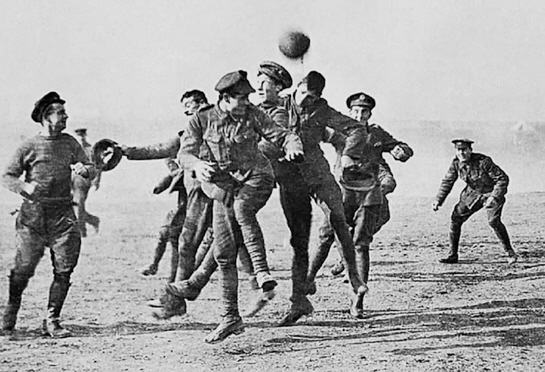
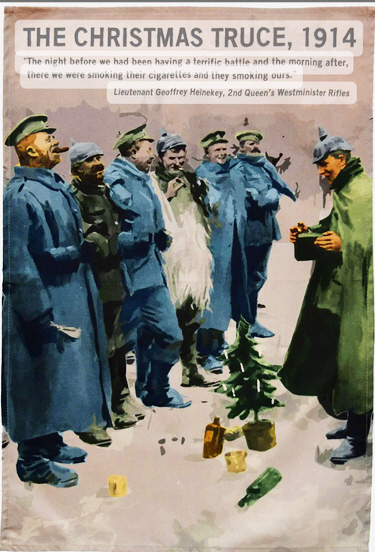
That being said, the story told in the following narrative ballad is not fiction. It’s inspired by an actual historical event that went down on Christmas Day, 1914, during World War I. You’ve probably read about the senseless and inhumane carnage of the trench warfare that both the British and the Germans endured on a daily basis for so long. Or perhaps, like me, you may have read one or more of the handful of non-fiction books that cover this incredible event. And actually you may, in fact, have already experienced these lyrics before, as the song is a well-known ballad.

After the song plays, I will share a few additional details that I’ve garnered from historical accounts of that unimaginable day (which actually ended up being more like two-and-a-half days) .

The song is titled “Christmas in the Trenches” and was written and recorded by singer/songwriter John McCutcheon circa 1984.

So, are your emotional seatbelts fastened securely?

“CHRISTMAS IN THE TRENCHES”

My name is Francis Tolliver. I come from Liverpool
Two years ago the war was waiting for me after school
To Belgium and to Flanders, to Germany to here
I fought for King and country I love dear

It was Christmas in the trenches where the frost so bitter hung
The frozen field of France were still, no Christmas song was sung
Our families back in England were toasting us that day
Their brave and glorious lads so far away

I was lyin’ with my mess-mates on the cold and rocky ground
When across the lines of battle came a most peculiar sound
Says I “Now listen up me boys”, each soldier strained to hear
As one young German voice sang out so clear

“He’s singin’ bloody well you know”, my partner says to me
Soon one by one each German voice joined in in harmony
The cannons rested silent. The gas cloud rolled no more
As Christmas brought us respite from the war

As soon as they were finished, a reverent pause was spent
‘God rest ye merry, gentlemen’ struck up some lads from Kent
The next they sang was ‘Stille Nacht”. “Tis ‘Silent Night'” says I
And in two tongues one song filled up that sky

“There’s someone comin’ towards us,” the front-line sentry cried
All sights were fixed on one lone figure trudging from their side
His truce flag, like a Christmas star, shone on that plain so bright
As he bravely strode, unarmed, into the night

Then one by one on either side walked into no-mans-land
With neither gun nor bayonet we met there hand to hand
We shared some secret brandy and wished each other well
And in a flare-lit soccer game we gave ’em hell


We traded chocolates, cigarettes and photgraphs from home
These sons and fathers far away from families of their own
Young Sanders played his squeeze box and they had a violin
This curious and unlikely band of men

Soon daylight stole upon us and France was France once more
With sad farewells we each began to settle back to war
But the question haunted every heart that lived that wonderous night
“Whose family have I fixed within my sights?”

It was Christmas in the trenches where the frost so bitter hung
The frozen fields of France were warmed as songs of peace were sung
For the walls they’d kept between us to exact the work of war
Had been crumbled and were gone for ever more

My name is Francis Tolliver. In Liverpool I dwell
Each Christmas come since World War One I’ve learned its lessons well
That the ones who call the shots won’t be among the dead and lame
And on each end of the rifle we’re the same

~ ~ ~ ~ ~ ~ ~ ~ ~ ~ ~ ~

I can barely imagine the sheer human need and relief that the combatants on either side felt when they had tentatively stepped across the barbed wire barriers and into each other’s camps only to find… regular blokes just like themselves! And so both sides did share around their cigarettes and chocolates and souvenirs. And then of course… soccer! Wouldn’t that be a nice way to wage war? With a soccer match?

But the thing that delightfully still surprises me from my reading is the following unbelievable scenario:

While the cats are away, the mice will play. Both war parties (consisting of the privates, corporals, and sergeants) had been virtually left to themselves by their majors and colonels for hours at a time that day, leaving the ‘grunts’ to fight it out as best they could for just a while on their own. I mean, hey, it was Christmas. So it’s pretty likely the superiors were snug and safe, somewhere well enough behind the respective enemy lines, and drinking up their Christmas toasts to one another. Because rank does have its privileges.

But here’s the truth of it: all of the soldiers on both sides, in the name of the Christmas spirit, had deserted their posts! The soldiers on both sides had just committed treason, a crime punishable by the firing squad! But… they had done it anyway because… well, it just seemed like the thing to do. At the time. I guess you just had to have been there. And more importantly, because war is senselss and stupid. And life is precious. And… OK, sure, because the cats were away.

But of course any time “the cats are away,” there’s a risk that the cats might just come back! And guess what! Their superior officers did come back. They came back from time to time to inspect their troops, measure any progress or lack of it, to see how their trench fortifications were holding up, and maybe even to count casualties.

And just what did these superior officers on either side discover?

Absolutely… nothing. Everything… as usual. And why?

(Now, I know this is going to sound like a poorly written, silly episode of HOGAN’S HEROES, but…)

Because the grunts on both sides had posted lookouts just for their officers returning. And when the alarm sounded, alerting them that officers were incoming (!), why the men just scampered right back behind their sandbagged posts like good little boys, manned their rifles and machine guns once again, and opened fire on one another! Funny thing was though, their respective ‘aims’ ‘seem’ to have gotten so bad all of a sudden that they apparently couldn’t hit the broad side of a barn.

No casualties.

But it LOOKED good. It was theater. And then of course, they all scampered righ back to their little yuletide party after the brass had departed once again.

It. Just. Doesn’t. Seem. Possible…

Does it.

You know in John McCutcheon’s introduction in the above video, I honestly just love his sweet anecdote of that little bevy of ex-German soldiers who “were THERE seventy-five years before,” showing up at John McCutcheon’s concerts to hear ‘their‘ story… being validated… in his song.

Just one of the many books that have covered this most unique military occuerence in the history of the Twentieth Century

What follows below was taken from a page posted on this url: https://blogs.loc.gov/headlinesandheroes/2020/12/good-will-toward-men-the-great-wars-christmas-truce/

The fighting in Europe had been growing for almost five months when Pope Benedict tried to arrange a truce between nations in early December 1914 for Christmas. But his efforts failed when Russia declined the truce. The notorious trenches of World War I were filled with weary, cold soldiers. But along the British and German lines, a sudden rise of the Christmas Spirit among the soldiers created a phenomenon that wasn’t seen for the rest of the war—the soldiers decided not to fight on Christmas. Stories of this unofficial Christmas Truce were published in newspapers around the world.*

The Chicago Herald printed part of a letter from a British soldier describing what took place. “On Christmas eve we were shouting across ‘Merry Christmas!’ The Germans shouted, ‘Don’t shoot till New Year’s day!’ Christmas morning the weather was foggy and there was no firing. We started wandering over toward the German lines. When the mist cleared we saw the Germans doing the same thing.”

Climbing from their trenches onto the battle-scarred “no man’s land,” British and German soldiers shook hands, swapped cigarettes and jokes, and even played football. “We all have wives and children…we’re just the same kind of men as you are,” one German said.

Gifts were exchanged between soldiers: pies, wine, cigars and cigarettes, chocolates, pictures, newspapers. Whatever they had with them in the trenches. Some even exchanged names and addresses to reconnect after the war! “We exchanged souvenirs; I got a German ribbon and photo of the Crown Prince of Bavaria. The Germans opposite us were awfully decent fellows—Saxons, intelligent, respectable-looking men. I had quite a decent talk with three or four and have two names and addresses in my notebook.” (New York Times, December 31, 1914, World War History: Newspaper Clippings 1914 to 1926.)

The day would be remembered and memorialized as a moment of peace during the long First World War. A day when soldiers put aside their orders and listened instead to their common decency and humanity. As one German soldier noted, “You are the same religion as we, and today is the day of peace.”

SIGH !

“If you could read my mind, Love…” Part 2

“If You Could Read My Mind, Love…” Part 1 ended with…

“At long last, he launches right into it. And all of us, the vast, entire WGUY radio listening audience everywhere, is finally given the lowdown.

“And the lowdown is… kind of incredible.”

~ ~ ~ ~ ~ ~ ~ ~ ~ ~ ~ ~

Yes, I’m here to tell you that the “lowdown” (note the quotation marks here) was indeed a tad incredible. And I remind you that you were warned in Part 1 that the story, though true, was a rather silly story as well. So there’s that.

But OK. The voice that came on the air came across as dark, authoritative, and rather harrumphing, leaving all of us 17 year old “adults” and younger (we, the demographic majority of WGUY’S listenership) suspecting that the man might be the President or CEO of WGUY, if not of the American Broadcasting Association itself. And in the following not-verbatim-nutshell, here is what he “regretted having to impart”:

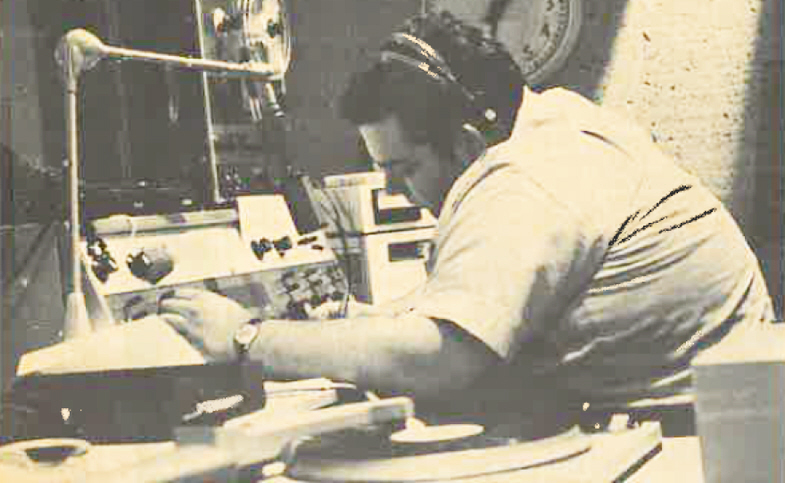
  • (stock photo– not Jack Dalton)
  • It had long been no secret that our DJ, Mr.  Jack Dalton, considers himself a champion of Democracy, and had long been feeling seriously distressed about the indefensible state of affairs in East and West Germany— namely the Berlin Wall.
  • Mr. Dalton, who was obviously feeling the frustration of his utter sense of powerlessness that many lone individuals feel in the face of his inability to take effective action when needed, decided to take it upon himself to perpetrate a one-man protest.
  • Consequently, and unfortunately, he arbitrarily chose our WGUY broadcast radio station to be the platform to rally the largest population possible into action.
  • In so doing, he impulsively locked himself inside the station’s sound studio, and refused to come out.
  • He then began the playing and replaying of that dreadful song that had become his personal anthem.
  • And finally, our listeners must rest assured in the confidence that any other such event such would never be allowed to re-occur at WGUY. Mr. Dalton had just had been summarily fired.  End of story.

Now, I think a lot of us 17 year old and younger “adults”felt that firing the poor man was excessively harsh. We were used to seeing our own age group getting summarily punished, for our own little crimes and misdemeanors, all the time, but never an adult. Especially not an adult that we looked up to and who, in our callow opinion, had done little wrong.

First of all, the incident had given us something that was mysteriously fun to speculate on throughout the day. Something that wasn’t boring for a change. Secondly, we all pretty much loved our Jack the DJ Dalton. His was the disembodied radio voice that woke us up practically every morning, that spoke to us every day— an adult who actually seemed to ‘get’ us, you know? Plus, our daily entertainer; he’d come out with the wildest and craziest funny things sometimes. It was easy to feel he was one of the few adults who seemed… on our side. In a way, he seemed one of us.

But more importantly, he was the bringer of our MUSIC, which was our daily bread.

And then, there was something else to consider. Just what, exactly, was his “crime?” Standing up for something he believed in? Being against the Berlin Wall? I mean, who wasn’t? What, were we kids the only ones willing to look at this and see The Big Picture? I mean, the boys in my circle were starting to take the man’s firing personally. It was an injury, an injustice that had been perpetrated on them, damnit! And for them, this was a cause worth fighting for. The hornets’ nest had been stirred up. Oh, my pals were talking it up, big time. Like something needed to be done.

Honestly? I felt somewhat that way myself, onlynot nearly so strongly. In my home and upbringing, the parents laid down the law, and the parents administered the justice, so to speak. The rules were (well, mostly) common sense rules and you just had to go with them, didn’t you. I mean even to me, the little delinquent of the family, that seemed fair. Hey, I was a real little sneak when it came to breaking some of the rules, but every time I got caught at it, like it or not (and oh, I never liked it), it always turned out it to have been my own stupid damn fault.

So I guess what I’m saying is, I‘d grown up feeling that in the long run you just had to accept the status quo. Didn’t seem to me like there was that much of a choice anyway. So… when this WGUY flap went down, I felt bad for the guy, sure. And yeah, I felt some of the emotional turmoil too. But in the long run like I said, I was like, he got fired, that’s too bad. Yeah, I liked his show and everything, but… oh well then. What can you do?  

Little did I know that an onslaught of angry phone calls were being made from all over the place. WGUY’s office phone was reportedly ringing off the hook. People didn’t like their DJ getting summarily fired, did they. They were angry. And they were busy making it clear to the fire-ers that they wanted their fire-ee summarily reinstated.  But me? I was out of the loop. I’d just gone home, watched a little TV, and then to bed. I never found out until the following afternoon when I went back in to work and got the new “lowdown” from some of my friends who popped into the garage to tell me the “great news.”

Huey Cole’s Esso, 20 years before I worked there…

What great news? The radio station had been amazingly overwhelmed with the hundreds of protests and the owners had finally caved in to the demands!

Wow. I was shocked. Now my pals (who, like me, lived thirty-five miles away from the GUY studios) had found all this out through the grapevine, second-hand. They themselves personally had nothing whatsoever to do with the outcome. Yet, by the way they were strutting around and claiming victory, you’d think they’d stormed the Bastille and chopped off Marie Antoinette’s head.

Teen-agers. You gotta love’em.

But anyway, it was all over. It had been a bloodless coup. Jack Dalton was right back on the air that evening and right back on the old payroll, like nothing whatsoever had ever happened. The proletariat had won the day over their capitalist oppressors. The world that was WGUYville was still a democracy. So. There would be Jack Dalton’s music. And all was well in the land.

And sure, I was happy for our DJ.

But… SPOILER ALERT: everything I’ve told you… you’ve gotten from the point of view of my 17 year old self. A kid’s point of view. A kid’s version of “the lowdown.” But as always, there were other points of view. More about this soon.

~ ~ ~ ~ ~ ~ ~ ~ ~ ~ ~ ~

The brain is a frickin’ file cabinet, isn’t it. And this one little pretty-much-forgotten event has been occupying one or more of my brain cells for almost sixty years. And in all those sixty years, I can recall only one other time that this incident conjured itself right up out of my subconscious memory. That happened ten or twelve years ago at the library where I work.

Four or five of us on the staff were, for whatever reason, chatting about some of our favorite novelty songs. Doctor Demento’s name had come up, bringing along with it such crazy titles such as Steve Martin’s “King Tut,”  Tom T-Bone Stankus’ “Existential Blues,” Napoleon XIV’s  “They’re Coming to Take Me Away, Ha Ha”, and “Junk Food Junkie” by Larry Gross, to name a few. And suddenly, bing!, the “West of the Wall” thing had popped up unbidden in my mind, seemingly out of the blue since the song is not a novelty tune in and of itself.

“Do any of you remember a particular song called ‘West of the Wall?” I asked.

The question got me blank stares and the shaking of heads.

So OK, I launched into the strange saga of WGUY’s for-mememorable episode when, suddenly, one of our library clerks, Jeannie Tabor, joyfully interrupted saying, “Oh my god! I DO remember that happening! It was so… weird, wasn’t it!”

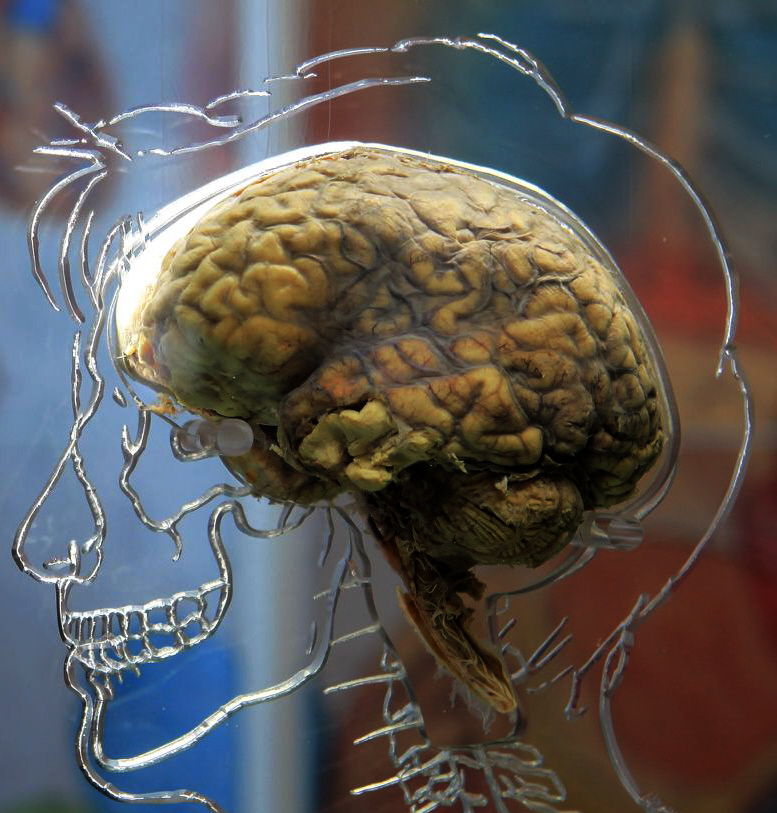
Actual X-ray of my brain…

So there were a pair of us then! Two of us each with a brain cell that had been harboring this identical data (no doubt in the form of ones and zeros), data that had been lying dormant all these years like a little time capsule waiting to be opened! So then, excitedly, we both went on, telling the story together, as each of us remembered it. What fun!

But it didn’t take long after that for our little time capsule excitement to subside, the fun little memory curling up again in our respective brain cells and going right back to sleep. In my case, never again to be awakened from its little vampire crypt until… one month ago, it just popped back up in my head (who knows why) and got me thinking of the incident as a possible topic for this blog. And the rest, as they say, is history.

But wait, there’s more! As I began to compose this post, I remembered how ridiculously surprised I’d been when Jeannie had confirmed my little story. And I started to wonder… who else, if anyone, might also remember it.

So what did I do? I fired up my laptop and did the standard twenty-first century thing. I went to Google. I figured there must be more people out there who remember it.

Well, even with Google, finding info on such obscure little happening wasn’t easy. For half a day, I worked my butt off like a private eye. And finally… I did manage to find a few conversational traces of a thread in the Facebook archives.

The following four quotations from old Facebook messages (once posted by a few now-disembodied texters) are all I was able to dig up from the some six decades of the digital graveyard:

  • “Kent Taylor Smith Hi Kent. Yup, I was listening that day and heard it. It was about the same time that I went into radio. BTW: Are you still with THE WAVE?”
  • “On August 13, 1961, East Berlin closed its border with West Berlin and erected a wall to stem the flow of Easterners to the West. This brought to mind a song, sung my Toni Fisher, titled “West of the Wall” which was released the following year, around June ’62. Well, one thought led to another and Bangor’s dawn to dusk radio station, WGUY, came to mind. They played all the “good stuff,” including “West of the Wall.” So, now I’m thinking did they really play “West of the Wall,” continuously, one day as a kind of protest, or is this just the confused memory of a 12 year-old adolescent? I don’t recall the names of the ‘jocks’ at WGUY who might be able to answer this torturous question. Is there anyone out there to help relieve this pressure? Perhaps the guys from Bangor, Maine – Radio & TV?”
  • “The event happened, it was so long ago nobody remembers it other than it happened. I first started working for WGUY in 2000 at the 102.1 incarnation. Nobody involved with the station then, or since, was involved. I even asked Bob Mooney about it once and he could barely remember it.”
  • “Your memory is very good, John. I remember that incident. Yes, a DJ on WGUY named Jack Dalton played “West Of the Wall” continuously for several hours. I don’t recall it being a “protest”, but rather a publicity stunt to draw attention to the station. My memory is a bit fuzzy on the aftermath, but if my memory is somewhat close, he was “fired” and then “rehired.” Someone else might have a clearer memory on that part. BTW, publicity stunts were quite common at that time. A DJ would “lock themselves” in the studio and play the same song multiple times, get “fired” and get “rehired” after listeners protested the firing. Side note: studio doors don’t have locks on them.”

So: there were some little data packets of the same ones and zeros lodged in the brains of these guys, just like they’re still lodged in Jeannie’s and my own. Cool.

 I’m always finding it very fascinating to be reminded that each of us has one of these biological, state-of-the-art, digital recorders installed right behind our eye sockets and that they’re on all the time,  picking up any and all of the vibrations of our five (known) senses and forever cataloging, collating, and cataloging them. I mean, jeez, who knows what all else is stored away in these things? Could be anything. Could be everything. Put’em all together and what’ve you got? Maybe only the entire history of the earth. One soul at a time.

~ ~ ~ ~ ~ ~ ~ ~ ~ ~ ~ ~

So now, allow me to stop here and make this little shout-out to any of you (out there) who have happened by chance to stumble onto this particular post, right now… who were living here in the WGUY World greater area back in ’64, and who also have some first-hand knowledge of this event. If so, could you, would you (please, please, please) leave a comment or two about it in the comment field at the end of the post? Like, you know, what you were doing at the time, what you remember thinking about it at the time, etc. Who knows, maybe there’s a lot of us. Maybe we could start a club. Or a support group, lol.

But no, seriously, all kidding aside, I’d really appreciate you checking in if that’s the case.

~ ~ ~ ~ ~ ~ ~ ~ ~ ~ ~ ~

Alright, I’m going to close here by swapping my 17 year old’s hat for my 77 year old’s one, and focusing us on the last few sentences of the fourth quotation from the Facebook thread I’d unearthed with Google’s help. This is what the gentleman said:

“My memory is a bit fuzzy on the aftermath, but if my memory is somewhat close, he was “fired” and then “rehired.” Someone else might have a clearer memory on that part. BTW, publicity stunts were quite common at that time. A DJ would “lock themselves” in the studio and play the same song multiple times, get “fired” and get “rehired” after listeners protested the firing. Side note: studio doors don’t have locks on them.”

Notice the use of all the quotation marks, where he says “fired” and “rehired”? That’s not the same thing as simply saying fired or rehired, is it. He has also called it what it actually was: a “publicity stunt.” And if you were an adult back then, you would have seen it for what it was too. But on the other hand, if you were a 17 year old or younger, all full of piss and vinegar, you’d probably see it as a call to arms, as many did.

It’s like the station put on a little play. And why?  To generate more interest in WGUY… that’s why To do something that would increase the numbers of their young listeners, something their sponsors would appreciate. And of course, that’s what it did. It worked. The adults back then did know. Of course they did. And it’s easy to imagine them rolling their eyes and getting quite a kick out of it. It’s easy to imagine them sighing, shaking their heads, and saying something like, “These crazy teen-agers. They’ll believe anything.”

But it’s the guy’s last sentence, his “Side note” that’s making me smile today.

“Studio doors don’t have locks on them.”

That’s right.

They don’t.

BUMMER II

USER GUIDE FOR TRANSITIONING MOTORCYCLE-GANG HIGH SCHOOL ENGLISH STUDENTS FROM BADASS POETRY TO RELATIVELY GOODASS POETRY IN ONLY A FEW EASY STEPS…

Yes, in BUMMER I, I detailed how I played Pied Piper of Hamelin, nefariously luring my unsuspecting wannabe belligerents (aka the savage junior EXILES biker gang) into conforming to the strict tenets of the high school English curriculum (aka the poetry unit). And yes, it was touch and go there for a while. However, they don’t call me The Dudley Dooright of Poetry for nuthin’ (he always gets his…… men).

And once I had them somewhat “enjoying” my dark Harry Chapin songs, I obviously had to face the fact that there weren’t that many of them. So I had to line up some ammunition for our future 45-minute classes. I knew I would have to try to wean them off music eventually (but by all means gradually and imperceptibly). But in the meantime, an obvious middle step was protest songs. There are so many of those to choose from, and so that’s where I went next. Protest songs would the ideal buffer zone for moseying on over to real poems. The transition couldn’t be too abrupt.

Always I was re-enforcing the point that singer-songwriter’s song lyrics are POETRY. And so far, so good.

This next one, of course, was one of their favorites. OK, it was one of mine. Check it out on YouTube, too. It’s a hoot and a half. And like all protest songs, rather historical.

“I Feel Like I’m Fixin’ To Die Rag”  by Country Joe and the Fish 
 

Well, come on all of you, big strong men, 
Uncle Sam needs your help again. 
He’s got himself in a terrible jam 
Way down yonder in Vietnam 
So put down your books and pick up a gun, 
We’re gonna have a whole lotta fun. 
 

CHORUS 

And it’s one, two, three, 
What are we fighting for? 
Don’t ask me, I don’t give a damn, 
Next stop is Vietnam; 
And it’s five, six, seven, 
Open up the pearly gates, 
Well there ain’t no time to wonder why, 
Whoopee! we’re all gonna die. 
 
Well, come on generals, let’s move fast; 
Your big chance has come at last. 
Now you can go out and get those reds 
‘Cause the only good commie is the one that’s dead 
And you know that peace can only be won 
When we’ve blown ’em all to kingdom come. 
 
CHORUS 
Come on Wall Street, don’t be slow, 
Why man, this is war au-go-go 
There’s plenty good money to be made 
By supplying the Army with the tools of its trade, 
But just hope and pray that if they drop the bomb, 
They drop it on the Viet Cong. 
 
CHORUS 
Come on mothers throughout the land, 
Pack your boys off to Vietnam. 
Come on fathers, and don’t hesitate 
To send your sons off before it’s too late. 
And you can be the first ones in your block 
To have your boy come home in a box. 

Protest songs were pretty easy pickings, practically a dime a dozen. So I used the above song as a springboard. And since the subject of “Fixin’ to Die” is War, I turned to my vast collection of War Poetry. I wasn’t looking for gory blood and guts though. I wanted something with meaning, something with a little tad of philosophical thinking that even they could dig. Stealthy me.

Basically I told them to look at themselves. What follows is not word-for-word, only an approximation of how I chose to begin.

“Look at you guys. You’re so badass, you don’t put up with anything you don’t want. Honestly? I’m impressed. I even envy you with your commitment to defend your beliefs and your goals. You don’t put up with any crap at all, do you. And then if worst comes to worst, you’re willing to face whatever consequences there are. That’s ultra cool. I like that.

“But you’re also very lucky to have been born in an era where protest has become such a thing. It wasn’t always that way, you know. It wasn’t that way when I was your age. We were brought up to toe the line, to accept whatever your parents insisted on, and also of course whatever The Man told you to accept. You didn’t want trouble, you didn’t want to make any waves. How boring, right? I’m sure you look at my generation as a bunch of wimps compared to yourselves.

 “Anyway, I’m not exactly certain when this protest spirit started to blossom, but it’s tied right in with the Draft and the Vietnam War. Young people started burning their draft cards. They began poking daisies and daffodils right down the National Guard’s rifle barrels pointed at them.

“Bob Dylan has an odd little song reflecting the early stages of the Big Change, where protestors were finding they had have a voice, they could just say NO to anything, even though it was officially mandated. He called it “Maggie’s Farm.” And whenever you hear “Maggie’s Farm” referred to in these lyrics, just think of it standing for The Parents, The School Principal, The Cop, The Draft, or whatever wannabe power was rubbing you the wrong way.”

Maggie’s Farm by Bob Dylan

Oh I ain’t gonna work on Maggie’s farm no more
Well, I wake in the morning
Fold my hands and pray for rain
I got a head full of ideas
That are drivin’ me insane
It’s a shame the way she makes me scrub the floor
I ain’t gonna work on Maggie’s farm no more

No, I ain’t gonna work for Maggie’s brother no more
Well, he hands you a nickel
He hands you a dime
He asks you with a grin
If you’re havin’ a good time
Then he fines you every time you slam the door
I ain’t gonna work for Maggie’s brother no more


No, I ain’t gonna work for Maggie’s pa no more
Well, he puts his cigar
Out in your face just for kicks
His bedroom window
It is made out of bricks
The National Guard stands around his door
Ah, I ain’t gonna work for Maggie’s pa no more


No, I ain’t gonna work for Maggie’s ma no more
Well, she talks to all the servants
About man and God and law
Everybody says
She’s the brains behind Pa
She’s sixty eight, but she says she’s fifty four
I ain’t gonna work for Maggie’s ma no more


No, I ain’t gonna work on Maggie’s farm no more
Well, I try my best
To be just like I am
But everybody wants you
To be just like them
They sing while you slave and I just get bored
I ain’t gonna work on Maggie’s farm no more

“Maggie’s Farm”went over fairly well with my little scholar-don’wannabes. It didn’t kill them, at any rate, but they weren’t really all that impressed. They’d all heard it before. But I did sense, after going over the individual lyrics as much as they allowed me to, that they were at least somewhat interested in the interpretation of Maggie’s Farm as a metaphor. Anyway, not bad for a biker gang. And I sensed by this point, they might also have begun to take a stand-offish interest in me, the Ichabod Crane at the front of the room, which couldn’t hurt.  Collateral reward. I shamelessly like to think that they perhaps admired my spunk in taking them on in this nearly impossible task: me, a Jimmy Stewart in The Man Who Shot Liberty Valence, LOL.

So the next step? Continuing on with… well, sucking up to them. And God forbid, trying to slip a pure, unadulterated, non-lyrical “poem” in right under their suspicious noses.  And I had one all picked out though, yeah, I knew it was a real longshot. Especially when, as I was passing out the printed lines of the poem I heard one of my biker boys exclaim. “Oh Jesus, guys, this one’s written by somebody called Jack the Pervert! No shit!”

Oh well, what did I expect, really? (After that, things went something, but not exactly, like this.)

Me: “OK, guys. This one’s written by a guy who was your age around 1915 or so.”

Them: “What, they had perverts back then too?”

Me: “Oh believe me guys, they had them way long before this author was around.”

Them: “This guy sounds stupid.”

Me: “He was a Frenchman.”

Them: “Yeah? That too? Well that figures.”

Them: “Christ, I woulda changed my friggin’ name at least, that’s for sure!”

Me: “His last name was actually pronounced prayVARE. In French. Doesn’t mean pervert. He was a famous movie-maker, writer, and poet. Died in 1977.”

Them: “Of What? Embarrassment?”

Them: “Getting beat up by a motorcycle gang?”

Them: “Jack the famous French pervert. Good riddance.”

Me: “Hey, listen up guys. If you can politely put up with me for just the next fifteen minutes, as scary and tough as that might be, I swear to you the next poem after this one is going to be so raunchy it’ll shock even you. I swear it.”  (I had a couple of Bukowskis up my sleeve as ammo.)

Them: “You wish.

Me: “Yeah, yeah, you’re right. And I could be wrong. But. Are you willing to prove me wrong, though?”

Them: “How? You wanna make another deal? Like, unless we fall down and drop dead on the floor of fright, we won’t have to do no more poems?

Me: “Something like that, yeah? Only not with this poem. The one after this is when we’ll deal.”

Them: “Bullshit.”

Me: “Come on, please,  guys. You tried me once. Dare to try me again?”

Anyway, yadda, yadda, yadda, and after more back and forth, I eventually had me a tenuous deal. But they made it clear that I really had to put up, or shut up. I told them I could live with that. So: following is the print out of the poem I was placing on their desks. I insisted on them quietly listening to me read it to them very slowly… and yes, twice (because it was so short and because I believe any poem should usually be read at least twice, if not more), before they could jump in and tell me in no uncertain words what they really thought it, regardless.

THE FAMILY by Jacques Prevert 

The mother knits 
The son goes to the war 
She finds this quite natural, the mother 

And the father? 
What does the father do? 
He has his business 

His wife knits 
His son goes to the war 
He has his business

He finds this quite natural, the father 
And the son 
What does the son find?

He finds absolutely nothing, the son 
His mother does her knitting, 
His father has his business 

And he has the war 
When the war is over 
He’ll go into business with his father

The war continues 
The mother continues knitting 
The father continues with his business

The son is killed 
He doesn’t continue
The father and mother visit the graveyard 

They find this natural 
The father and the mother
Life goes on 

A life of knitting, war, business 
Business, war, knitting, war 
Business, business, business 

Life with the graveyard 

OK, truth? This experiment was pretty much an utter fiasco, as you can imagine. The common adjective they could all agree on was…STUPID! I bet I heardthe word STUPID! about seventy-five times in the follow-up. And when I asked what any of them thought about what the author was trying to put across with this one, they hooted and sneered. “Can’t you read?!” they asked me. “Jeez! It’s all right there right out in front of you, for cryin’ out loud. I mean, it says it over and over: the wife knits, the son goes to the war, and the father has his business! I mean, wow, isn’t that friggin’ interesting story! Hey, dude, if that’s what a poem is, and you like that stuff, then man, it royally sucks being you more than I thought.”

Ah well. You win some, you lose some, and some get rained out. I’d given it he old college try. I did manage to get a couple of sentences squeezed in afterward, despite all the uproar, but it’s pretty doubtful any of them paid much attention to my explanation of”The Family.” However, in the bigger sense, I had won… in that I had secured for myself a chance for another go-round in that rodeo. In the next class, I had three poems in mind that would zap them like a fully-charged cattle prod. And I couldn’t wait!